
Full-spectrum
Usually marketed as an extract containing CBD alongside other plant compounds, potentially including THC. The exact cannabinoid profile varies by product. The term is not a promise of superior results.
Broad-spectrum
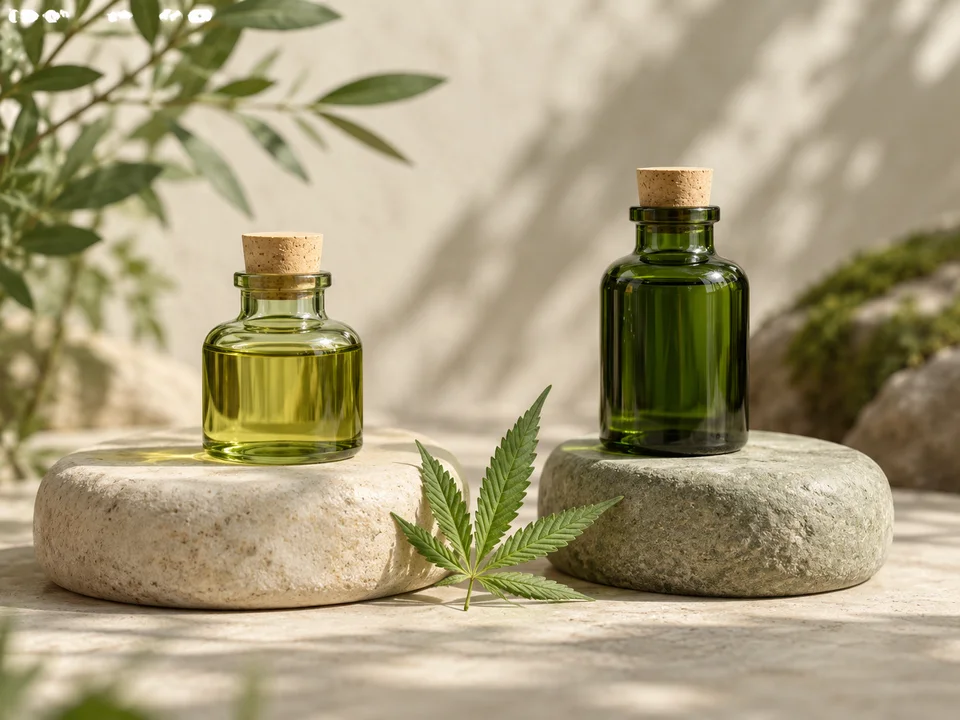
Usually used for an extract containing several cannabinoids with THC removed or reduced. Do not read the name alone as proof of zero THC. Look for the testing method and the report’s detection limits.

Full-spectrum, broad-spectrum and isolate describe extract types. The batch report shows which cannabinoids were measured and the method’s limits.
Explore the data and checksIllustrative composition · AI-generatedCBD isolate
Refers to CBD separated from other plant compounds. A finished isolate-based product still has other ingredients, such as a carrier oil or gummy base. “Isolate” describes the CBD ingredient rather than every component in the package.
Compare what you can verify
- Find a report for the exact batch.
- Compare cannabinoid results with the label.
- Read units and detection limits carefully.
- Treat “entourage effect” claims as claims to examine, not a reason to skip evidence.
Read what the report actually covers
Use the spectrum name as a starting point, then distinguish these three report situations.
| Report situation | What you can read from it | What you cannot conclude |
|---|---|---|
| A cannabinoid has a numerical result | An amount was reported for that sample and method | That every bottle or batch has the same amount |
| THC is marked not detected with a stated limit | The result is bounded by that method’s detection limit | Absolute zero THC in every context |
| THC is not listed | The document does not give that result | That THC was tested and absent |
| Only the isolate ingredient was tested | The document describes the starting ingredient | The profile of the finished oil or gummy |
Reading the comparison
Two oils labelled broad-spectrum may come with different laboratory panels. A report listing only CBD does not prove that other cannabinoids are absent; those substances may not have been measured.
NIST’s quality programme describes analyte and method choices. The FSA survey also separates cannabinoid measurements from other tests. Compare report coverage before comparing numbers. A broader panel answers more composition questions without proving better clinical results. The COA guide explains sample identity and detection limits.
From spectrum name to measured profile
- Read the name
Record full-spectrum, broad-spectrum or isolate.
- Find the sample
Match the finished product and batch.
- Map the results
Measured, below a stated limit, or not reported.
Scope: The two oils are hypothetical. This comparison does not verify spectrum claims, establish legal compliance or rank clinical effectiveness.
Questions worth asking
Does broad-spectrum guarantee zero THC?
The name alone does not. Read the matching sample result, method and detection limit; not detected is not an absolute-zero guarantee.
Does an isolate make the whole product pure CBD?
No. Isolate describes the CBD ingredient. A finished oil or gummy also contains its carrier or recipe and needs its own composition information.
Sources & scope
- Food Standards Agency · Analysis of CBD products (2022–23)
- FDA · CBD: risks, side effects and unknowns
- NIST · Cannabis laboratory quality assurance and analyte scope
- FSA and Fera Science · Analysis of CBD products, 2022–23
Sources checked October 19, 2026. Linked material supports the specific claims discussed; practical label checklists are editorial guidance. This article has not received clinical or veterinary peer review. Read our editorial approach.
Educational information for adults. Not a diagnosis, treatment plan, product endorsement, or personal dosing recommendation. Ask a qualified clinician or veterinarian about your situation.