Read storage directions before opening
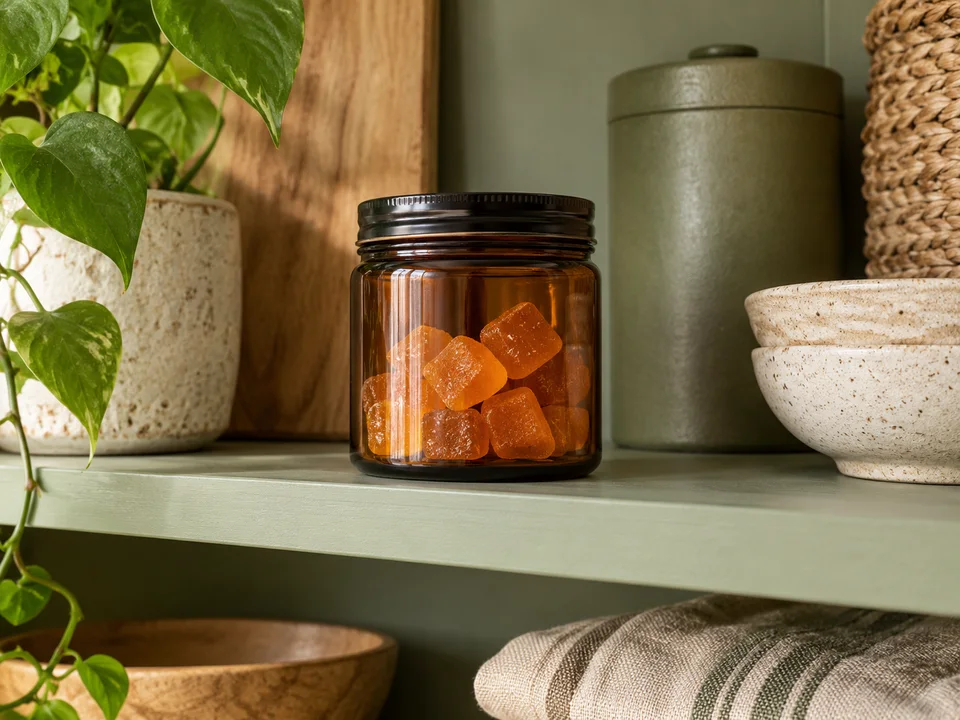
Find the storage line on the tub, pouch or outer carton before discarding anything. Naturecan’s general CBD guidance calls for a cool, dark, dry place and a sealed original package. [1] Treat that as an example from one manufacturer. Your gummy may have different directions, so use the instructions for the exact formula and pack. Do not assume that a bathroom shelf, sunny windowsill or car is suitable simply because another supplement is kept there. If a temperature range is specified, keep a record of it.
Copy the date wording, not just the date
A ‘best before’ date and a ‘use by’ date do different jobs. The UK Food Standards Agency explains that best-before wording concerns quality, while use-by wording concerns safety; the storage directions also matter. [2] Copy the words next to the date when asking about a product. A batch code or manufacture date should not be silently treated as an expiry date. If a separate instruction says to use the contents within a period after opening, record the opening date and retain that instruction with the package.
Keep the label instructions, batch and opening date together. These details help the manufacturer assess a storage question.
Explore the data and checksIllustrative composition · AI-generatedAsk about a damaged or overheated delivery
Check the seal and the package before putting a new order away. FSA retail guidance identifies damaged packaging and broken seals as reasons food may be unsafe. [3] Photograph any problem and contact the seller or manufacturer with the product name, batch, date wording and delivery condition. If gummies have melted together or the seal is damaged, do not decide suitability by tasting one. Ask about that specific pack. A generic shelf-life estimate cannot resolve what happened during transport or whether a manufacturer’s storage conditions were met.
Keep the pack out of children’s reach
FDA guidance says cannabis-containing products should be kept out of children’s reach to reduce accidental ingestion. [4] Choose secure storage rather than leaving a gummy pouch beside ordinary sweets. Keep the full label available so another adult can identify the contents and the maker’s warnings. A child-resistant closure, if supplied, is another reason to keep the original container. If a child may have eaten a cannabis product, seek medical advice promptly and take the packaging; FDA advises assessment especially when the child feels unwell or behaves unusually. [4]
Resolve missing information with the manufacturer
For an unreadable date or an unclear storage instruction, send the manufacturer a photo and the batch code. Ask which date applies to that pack, whether opening changes the period, and what to do if the storage conditions were not followed. Do not adopt a one-year or two-year rule from a different product. Normal colour, smell or texture cannot give you the missing batch information. For composition questions, keep this storage check alongside our CBD gummy label guide; the two checks address different parts of the same package.
Two dates can apply to one pack
This table is a hypothetical record, not a shelf-life claim for CBD gummies. Substitute the exact wording on your own package.
| Information on the hypothetical pack | How to record it | What it does not establish |
|---|---|---|
| Best before 31 December 2026 | Keep the quality-date wording with the date | That storage conditions were followed. |
| Use within 30 days after opening | Record an opening date and the resulting limit | A new permission to ignore the printed date. |
| Opened 10 October 2026 | 30 days after this date is 9 November 2026 | That a 30-day rule applies to another product. |
| Pack arrived with a broken seal | Photograph and ask the seller about this pack | That the dates settle its condition. |
Reading the comparison
Suppose a hypothetical pack states “best before 31 December” and “use within 30 days after opening”. Opening it on 10 October puts the second date at 9 November. Recording December alone would miss the after-opening instruction. This calculation applies only to the invented label, not to all gummies.
The FSA distinguishes best-before quality dates from use-by safety dates. Naturecan’s general guidance also refers to the label and original packaging. Ask the manufacturer about a pack stored outside its stated conditions. Normal appearance or later refrigeration cannot verify its storage history.
Create a usable storage record
- Copy the printed wording
Keep best before, use by and batch codes distinct.
- Mark opening if relevant
Use only an after-opening period stated for that product.
- Check the conditions
Ask about heat exposure, seal damage or missing information.
Scope: The October-to-November calculation is hypothetical. It does not predict cannabinoid stability or microbiological safety, and it cannot override a use-by date or manufacturer directions.
Questions worth asking
Does opening a pack change its best-before date?
Opening may activate a separate manufacturer instruction, such as a stated period after opening. Keep both instructions; do not assume the printed date alone applies to an opened pack.
Can I work out a CBD gummy’s expiry from its purchase date?
No. Buying it later does not reset its manufacturing or batch history. Use the package’s date wording and ask the manufacturer if it is missing or unclear.
Sources & scope
- Naturecan: manufacturer FAQ, storage instructions
- Food Standards Agency: Informing consumers, best-before and use-by dates
- Food Standards Agency: Stock control, packaging and delivery checks
- FDA: Cannabis and cannabis-derived products, questions 21 and 23 on children
- Food Standards Agency: food date labels and storage conditions
- Naturecan: manufacturer FAQ, storage guidance
Sources checked October 19, 2026. Linked material supports the specific claims discussed; practical label checklists are editorial guidance. This article has not received clinical or veterinary peer review. Read our editorial approach.
Educational information for adults. Not a diagnosis, treatment plan, product endorsement, or personal dosing recommendation. Ask a qualified clinician or veterinarian about your situation.